
 English
 Türkçe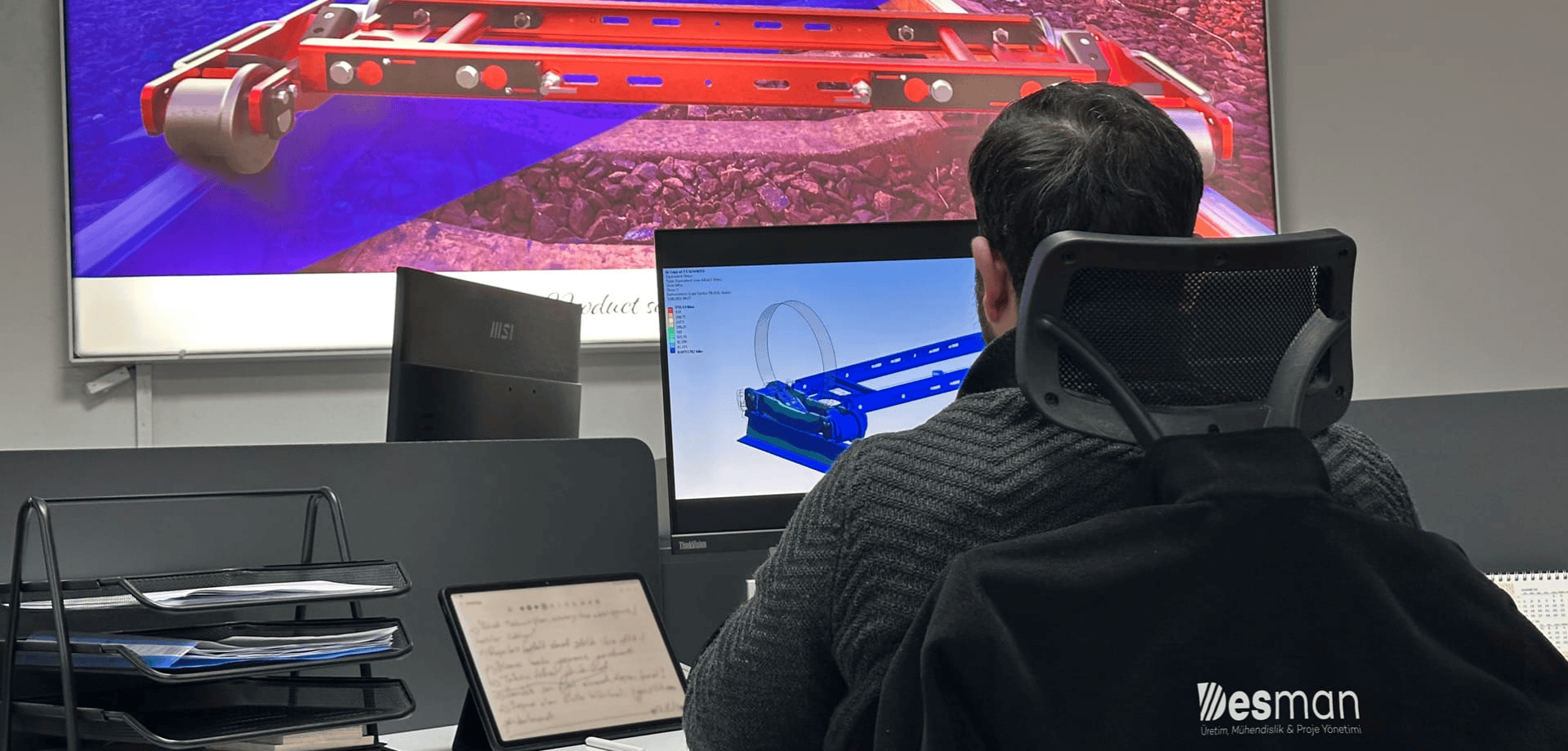
Engineering Analysis Services: Solutions for Performance and Reliability
Engineering analysis services are critical for evaluating the durability, reliability, and safety of products and systems from the design phase onward. In modern engineering projects, analysis methods are employed to predict how designs will perform under real-world conditions, identify potential risks in advance, and optimize performance. Simulations such as FEA (Structural Analysis) and RAMS Analysis, conducted before physical prototyping, reduce product development costs and enhance reliability.
Desman offers comprehensive solutions in engineering analysis. With our experienced engineers and advanced simulation software, we provide reliable support for design validation, safety, and risk management in industrial projects.
Below is a summary of the core engineering analysis services provided by Desman:
|
Analysis Service |
Description |
|---|---|
|
Structural Analysis (FEA) |
Provides design validation through static, dynamic, fatigue, and buckling analyses. |
|
Vibration and Modal Analysis |
Determines vibration behavior, natural frequencies, and resonance risks. |
|
RAMS Analysis |
Offers reliability, availability, maintainability, and safety assessments. |
|
Thermal and Fluid Dynamics Analysis |
Conducts comprehensive simulations on heat transfer and fluid dynamics. |
|
Prototype and Test Simulations |
Implements virtual testing processes for R&D, product development, and optimization. |
|
Industry Compliance and Standards |
Provides analysis and documentation compliant with industry requirements and international standards. |
Desman’s engineering analysis services support projects in high-demand sectors such as defense, aviation, rail systems, and energy, ensuring performance, safety, and cost-effectiveness throughout the project lifecycle.
Detailed information on the application areas and added value of our analysis services can be found in the sections below.
Table of Contents
- Engineering Analysis Services: Solutions for Performance and Reliability
- The Role of Engineering Analyses in the Design Process
- RAMS Analysis: Reliability and System Safety
- Desman’s Core Competencies in Analysis Services
The Role of Engineering Analyses in the Design Process
Engineering analyses are mathematical and simulation-based methods used to predict how a design will perform under real-world conditions. These analyses allow for a detailed examination of a product’s or system’s mechanical, thermal, or fluid dynamics behavior before production. Analysis-driven design ensures project success by delivering the following key benefits:
- Performance Optimization: Identifies the design’s strengths and weaknesses, enabling optimization for higher performance with less material.
- Risk Mitigation: Detects potential failure modes, stress concentrations, and fatigue life in advance, allowing for necessary design improvements.
- Cost and Time Efficiency: Reduces the need for physical prototypes and testing costs. Early correction of design flaws eliminates revision costs during production.
- Reliability and Safety: Ensures the product operates safely and in compliance with standards throughout its operational life.
Structural Analysis (FEA - Finite Element Analysis)
FEA (Finite Element Analysis) and structural analysis are simulation techniques used to test the mechanical behavior of structures, components, or assemblies with complex geometries. The model to be analyzed is divided into a finite number of small elements, and the interactions within each element are mathematically solved. FEA enables the prediction of a design’s behavior under static and dynamic loads.
Application Areas
- Strength Analysis: Evaluates the risk of deformation or failure under applied loads, identifying maximum stress points to ensure design safety.
- Fatigue Analysis: Estimates the lifespan of components under cyclic loads and identifies potential crack initiation points.
- Vibration and Modal Analysis: Determines the system’s natural frequencies and analyzes the risk of resonance during operation, critical for aviation and automotive applications.
- Buckling Analysis: Assesses the stability and risk of shape deformation in structures subjected to compressive loads.
Desman’s FEA services are designed to validate the mechanical integrity, safety, and field performance of your projects.
RAMS Analysis: Reliability and System Safety
RAMS (Reliability, Availability, Maintainability, Safety) analysis is a systematic method for evaluating a product’s or system’s performance throughout its lifecycle, particularly in complex sectors such as rail systems, aviation, defense, and energy. RAMS analysis not only assesses whether a product functions but also evaluates how long it can operate without failure, the efficiency of maintenance processes, and operational safety.
Components of RAMS Analysis
- Reliability: The probability that a system will perform its intended function without failure under specified conditions for a given period. Reliability analyses focus on minimizing failure rates and improving operational lifespan.
- Availability: The readiness of a system to operate when needed, directly influenced by both reliability and maintainability parameters.
- Maintainability: The ease and speed with which a system can be repaired or maintained after a failure, reducing total downtime.
- Safety: Ensures systems operate without causing harm to human health, the environment, or other equipment. Safety analyses evaluate potential hazards and include preventive measures to achieve acceptable risk levels.
Desman’s RAMS analysis services ensure that your projects are not only technically functional but also sustainably reliable and safe. They support lifecycle cost control and compliance with industry standards, particularly in long-term and critical infrastructure projects.
Desman’s Core Competencies in Analysis Services
Below is a summary of Desman’s primary services and competencies in engineering analysis processes:
- FEA (Finite Element Analysis):
- Static and dynamic structural analysis
- Strength and fatigue life calculations
- Buckling, vibration (modal), and thermal analysis
- Integrated simulation support for design and prototype validation
- RAMS Analysis (Reliability, Availability, Maintainability, Safety):
- System reliability and availability modeling
- Maintainability assessments
- Safety and operational risk analysis
- Lifecycle cost optimization
- Industry Applications:
- Analysis support compliant with industry standards for defense, aviation, rail systems, and energy sectors
- Analysis-driven approach for the durability, efficiency, and safety of your designs
- Expert Engineering Team and Advanced Tools:
- Up-to-date FEA and RAMS software, validation standards, and industry-compliant methodologies
- Customized analysis and reporting services tailored to project requirements
- Technical consulting and process optimization support for our clients