
 English
 Türkçe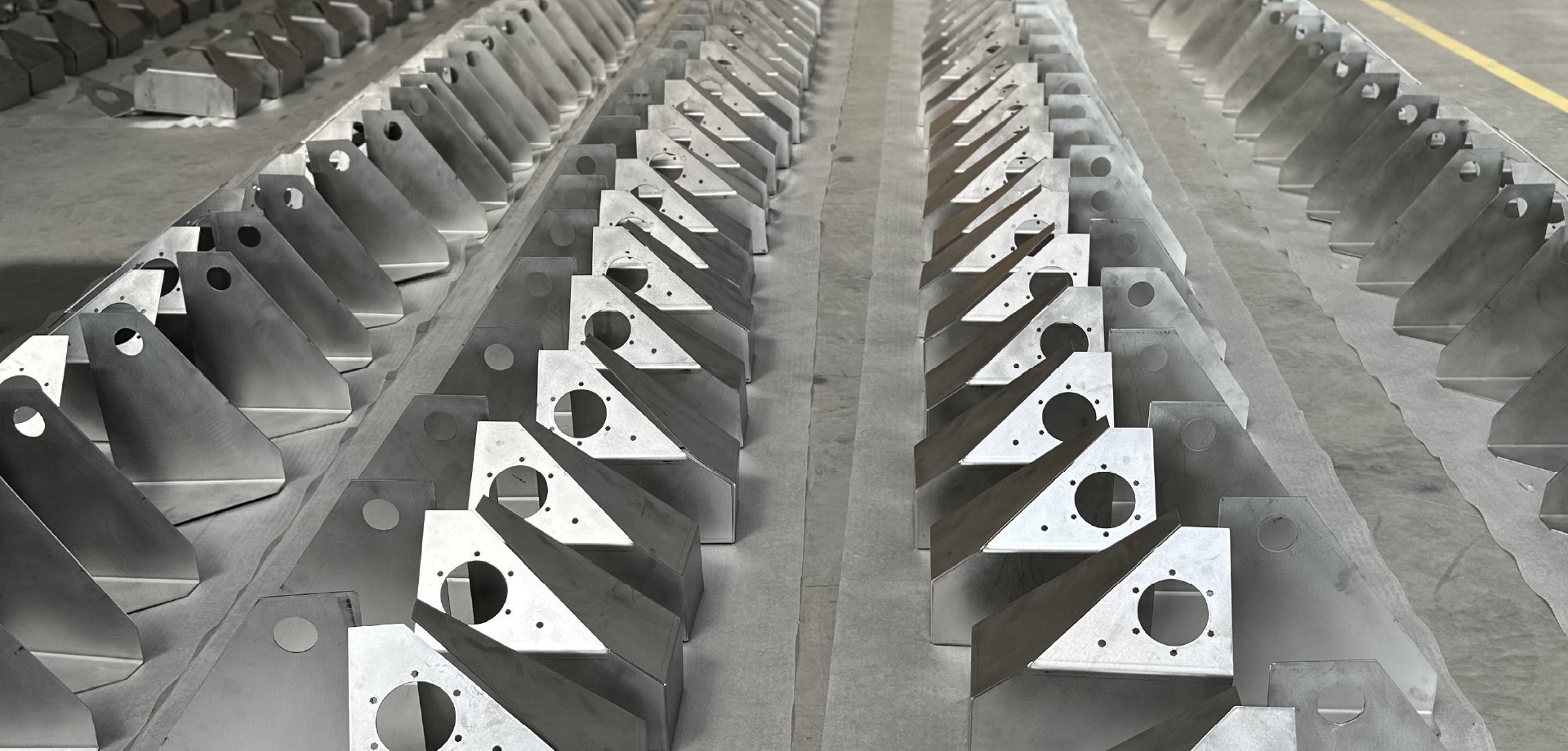
CNC Press Brake Bending Service: Applications and Advantages
Sheet metal forming is one of the core disciplines of industrial manufacturing. In this field, CNC press brake bending technology plays a critical role in imparting precise and repeatable forms to metal sheets. Computer Numerical Control (CNC) managed press brakes bend sheet metal with flawless accuracy using hydraulic or servo-electric power, following pre-programmed angles and dimensions. This method is indispensable for industries requiring high engineering standards, such as defense, aviation, rail systems, and energy.
In this article, we will explore in detail what CNC press brake bending technology is, its fundamental operating principles, and the strategic advantages it provides to manufacturing processes. Additionally, we will focus on its applications across various industries and discuss Desman’s advanced capabilities and machine park in this field.
What is CNC Press Brake Bending and Why is it Important?
CNC press brake bending is the process of bending a metal sheet at a specific angle by applying controlled pressure between a female die (V-die) and a male punch. Unlike traditional methods, this process is entirely managed by a CNC unit. Parameters such as bending sequence, angle, material thickness, and spring-back, entered by the operator or transferred from CAD/CAM software, enable the machine’s backgauge and ram movements to be controlled with micron-level precision.
The importance of this technology stems from its high precision, repeatability, and efficiency. The production of complex parts, geometries requiring multiple bends, and assemblies with tight tolerances is made possible with CNC press brake bending. The automation of the process minimizes human error, ensuring that every part is produced in full compliance with technical drawing specifications. This is a critical factor in maintaining quality consistency, especially in serial production.
Strategic Advantages of CNC Press Brake Bending Technology
CNC press brake bending not only adds precision to manufacturing processes but also offers significant advantages in terms of efficiency and cost.
Superior Precision and Repeatability
CNC control systems manage bending angles and backgauge positions within tight tolerances, such as ±0.1 mm. This precision ensures perfect compatibility of parts in complex assemblies. Thousands of parts produced using the same program exhibit identical geometric properties as the first part, ensuring quality standardization in serial production.
Production of Complex Geometries
Multi-axis (4, 6, or more) CNC press brakes enable the production of conical bends, offset bends, and complex multi-step profiles beyond standard bending. In particular, 6-axis machines, with the movement capabilities of the backgauge system in the X, R, Z1, and Z2 axes, allow even three-dimensional and asymmetric parts to be bent precisely in a single operation.
Efficiency and Speed
Automatic backgauge positioning, quick die change systems, and optimized bending sequences significantly reduce production cycle times. Compared to traditional methods, setup times are dramatically reduced. This speed creates a significant competitive advantage by shortening delivery times in both prototype and high-volume serial production.
Cost Efficiency and Material Savings
Precise bending calculations and spring-back compensation minimize material waste and scrap rates. The high repeatability of the process eliminates additional costs due to defective production. Requiring less operator intervention reduces labor costs and increases efficiency.
Applications of CNC Press Brake Bending
The advantages of CNC press brake bending make it a fundamental technology in the production processes of many critical industries.
- Defense and Aviation Industries: Used in the production of armored vehicle bodies, chassis, ammunition boxes, aircraft structural components, and mounting brackets, where both durability and precision are critical. Controlling material deformation and ensuring geometric accuracy are vital in these sectors.
- Rail Systems: CNC press brakes play a critical role in bending large and long parts such as wagon bodies, interior trim panels, seat frames, and electrical panels. High-tonnage and long-bending-capacity machines meet the needs of this sector.
- Energy Sector: Used in the manufacture of structural components such as wind turbine towers, transformer cabinets, generator chassis, and solar panel mounting systems. Precise bending of thick sheet materials is a key requirement in this field.
- Automotive and Machinery Manufacturing: Widely preferred for the serial production of parts such as vehicle chassis, body panels, machine covers, and industrial cabinets.
Technical Details: How Do CNC Press Brake Machines Work?
The performance of a CNC press brake is directly related to its number of axes and technical components.
4-Axis Press Brake Machines
These machines are ideal for basic and moderately complex bending operations. The axes are typically defined as follows:
- Y1 / Y2 Axes: Control the independent movement of the hydraulic cylinders on both sides of the ram to ensure precise angular bending.
- X Axis: Controls the forward-backward movement of the backgauge system to determine the dimension of the bending flange.
- R Axis: Manages the up-down movement of the backgauge system, necessary for bends at different heights and special operations like Z-bends.
4-axis machines offer high flexibility and efficiency for straight, angular, and multi-step bends.
6-Axis Press Brake Machines
Designed for more complex and three-dimensional geometries, these machines include two additional axes:
- Z1 / Z2 Axes: Enable independent left-right movement of the backgauge fingers, allowing conical bends or bends with different backgauge dimensions on the same part.
6-axis control provides near-unlimited flexibility to the operator, enabling even the most complex engineering designs to be realized with precision.
Precision Sheet Metal Forming Solutions with Desman
At Desman, we provide services that meet the highest quality standards in sheet metal forming. With our experienced engineers, operators, and quality control personnel, we produce in full compliance with all geometric tolerances specified in technical drawings or the DIN 6935: 2011-10 standard.
Our machine park includes state-of-the-art Dener 6-Axis (320 tons) and two Dener 4-Axis (320 tons) CNC press brake bending machines, enabling us to serve a wide range of materials and thicknesses:
- Carbon Steel: 0.5 mm – 30 mm
- Stainless Steel: 0.5 mm – 15 mm
- Aluminum: 0.5 mm – 15 mm
Our services range from simple bends to the most complex 3D geometries. With value-added services such as CMM quality control and verification, custom fixture/die design and production, sheet metal flat pattern calculations, and creating manufacturing drawings from 3D models, we provide comprehensive solutions for your projects.
Ensure the precision, speed, and reliability required for your demanding projects in defense, aviation, rail systems, and energy sectors with Desman’s CNC press brake bending services. Contact us to discuss your project requirements and request a quote from our expert team.