
 English
 Türkçe
3-Axis CNC
3-Axis CNC Vertical Machining: Applications and Advantages
Machining is a cornerstone of modern industry, and the technologies employed directly impact production efficiency and part quality. Among these, 3-axis CNC vertical machining stands out for its reliability, cost-effectiveness, and wide range of applications. It is particularly ideal for the serial production or prototyping of parts with less complex geometries.
In this article, we will explore what 3-axis CNC vertical machining is, its core operating principles, and the advantages it offers. We will also examine its role in industries such as automotive, general manufacturing, and prototyping, while highlighting Desman’s expertise and solutions in this field.
What is 3-Axis CNC Vertical Machining?
3-axis CNC (Computer Numerical Control) vertical machining is a machining method where a workpiece is shaped by moving it along three linear axes (X, Y, and Z). In this process, the cutting tool is mounted on a vertical spindle and remains stationary, while the worktable, holding the workpiece, moves in the X (left-right) and Y (forward-backward) axes. The cutting tool moves along the Z-axis (up-down) to remove material.
The significance of this technology lies in its simplicity and efficiency. 3-axis machines, being easier to program and operate, provide sufficient precision and speed for numerous industrial applications. They are highly effective for machining planar surfaces, pockets, holes, and profiles, making them one of the most widely used CNC technologies in manufacturing.
Advantages of 3-Axis CNC Machining
3-axis CNC machining offers strategic advantages, making it an optimal choice for specific manufacturing needs.
Cost-Effectiveness
One of the greatest advantages of this technology is its lower investment and operating costs. 3-axis CNC machines are more affordable than their 5-axis counterparts. Additionally, simpler programming and setup processes reduce operator training and production preparation costs, making it an attractive option for budget-conscious projects and small to medium-sized enterprises (SMEs).
Simplicity and High Efficiency
3-axis machining processes are less complex in terms of programming and setup, shortening production preparation times and enabling operators to adapt quickly to the machines. For less complex parts, this technology offers high speed and repeatability, maximizing efficiency in serial production.
High Precision and Reliability
For parts with less complex geometries, 3-axis CNC machining delivers excellent precision and surface quality. Thanks to their rigid structures and simple motion mechanisms, these machines produce consistent and reliable results, making them ideal for manufacturing to general tolerance standards like ISO 2768.
Rapid Prototyping and Low-Volume Production
Simple setup and programming processes make 3-axis CNC machines ideal for rapid prototyping. Designers and engineers can quickly turn ideas into physical models. Additionally, they offer a flexible and fast solution for low-volume or one-off production needs.
Applications of 3-Axis CNC Vertical Machining
Thanks to its reliability and efficiency, 3-axis CNC machining is widely used across multiple industries.
- Automotive Industry: Used for serial production of less complex components such as engine blocks, brackets, fasteners, and various assembly parts. It also plays a significant role in manufacturing fixtures and tools for production lines.
- General Manufacturing and Machinery: A core technology for producing machine bodies, chassis, covers, flanges, and standard machine components, meeting serial production needs with high efficiency.
- Mold and Prototype Production: Used for rapid production of injection mold components, casting patterns, and prototypes with simple geometries, offering a cost-effective solution in the early stages of product development.
- Defense and Aerospace: Preferred for manufacturing simpler structural components, assembly fixtures, and ground support equipment in these industries.
Technical Specifications and Comparison with 5-Axis Machining
The core principle of a 3-axis CNC vertical machining center involves the cutting tool removing material via Z-axis movement while the workpiece is positioned in the X-Y plane. This means the part can only be machined from one direction at a time. If a different surface needs machining, the operation must be paused, and the part manually repositioned and reclamped.
Key Differences Between 3-Axis and 5-Axis Machining:
- Motion Capability: 3-axis machines operate solely on linear axes (X, Y, Z), while 5-axis machines add two rotational axes (A, B, or C) for greater flexibility.
- Complexity: 5-axis machining can handle undercuts and complex, curved surfaces in a single setup, while 3-axis machining requires multiple setups or specialized fixtures for such geometries.
- Cost and Setup: 3-axis machining offers lower initial investment and simpler setup processes, whereas 5-axis machining requires a higher initial investment and more complex programming.
In summary, for projects involving planar surfaces and simple geometries, 3-axis CNC machining is the most efficient and cost-effective solution. However, for projects requiring complex contours and multi-surface machining, 5-axis technology is more suitable.
Reliable 3-Axis CNC Machining Solutions with Desman
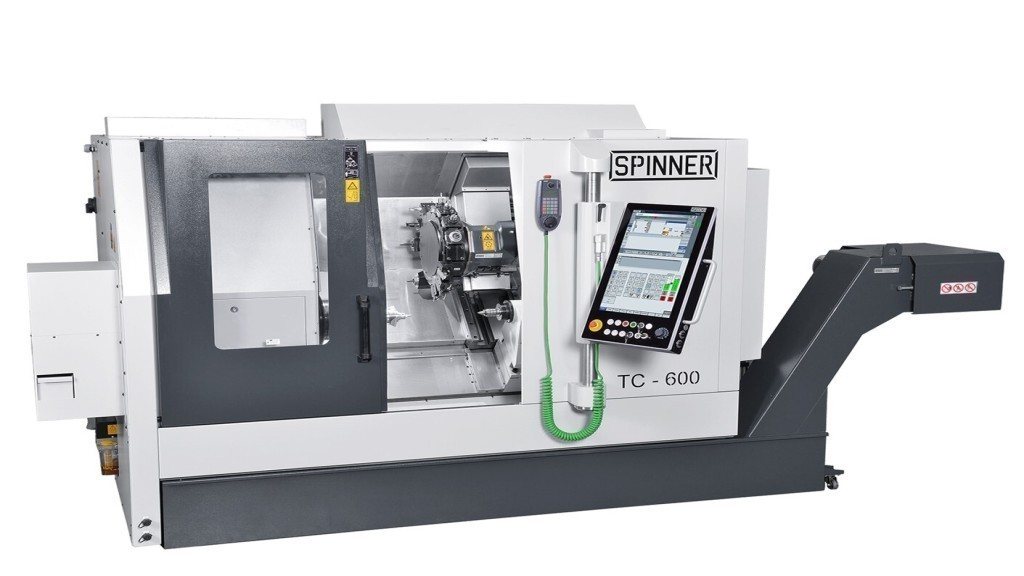
At Desman, we deliver reliable and efficient manufacturing services using high-precision 3-axis CNC vertical machining centers like the Spinner VC1150. With a machining capacity of up to 1400x620x720 mm and our expert team, we produce high-quality parts for a wide range of industries, from automotive to general manufacturing.
If you’re seeking cost-effectiveness, speed, and reliability in your projects, contact us to learn more about our 3-axis CNC machining services. Our expert team is ready to provide the most suitable solutions for your manufacturing needs.
Meta Information
Meta Title: 3-Axis CNC Vertical Machining: Applications | Desman
Meta Description: Learn about 3-axis CNC vertical machining, its applications in automotive and general manufacturing, and advantages like cost-effectiveness.
0 Comments